Reflective Teaching Practices – Week 1

reflections-1194851

(Photo compliments of Mistie Bibee from freeimages.com)

I am beginning my quest to reflect back on my teaching practice each day and week for the rest of the semester/year. During this reflective period, I am throwing out or reworking what isn’t getting my students engaged. Though I am posting for my own professional use, I invite anyone to offer suggestions and critiques into what I am doing or what I could be doing in the future.

There were two specific areas I wanted to highlight with 8th grade. First, I recapped parenthetical documentation. We went over this prior to Christmas break and it needed to be reviewed for a paper they are doing in Social Studies. The lesson in December went well, however, the review was just mehh! One class asked questions and were engaged. My first class, however, was unresponsive and I think if I used jumper cables they wouldn’t have budged. So, the initial lesson was good. On the other hand, the review needs some spice.

Next, the 8th graders finished their semester writing reflections. I asked them to look at their first piece of writing from the beginning of the year and it was awesome to just watch their facial reactions. I then had them follow-up with some basic reflections questions. They all did really well for the most part. I will definitely keep doing reflections.

As a side note, although 8th graders did well, I have some work to do with the 7th graders. Last week we started to look at Civil Right issues prior to us starting to Role of Thunder, Hear My Cry by Mildred Taylor. I showed a short video to the classes, but I feel that I need to do more here. Some how I need to incorporate informational text reading at the beginning of this unit.

I also need to continue to work on grammar and doing more of it in my classes.

Cheers!


Teachers Struggle Too

8226451812_88007f08df_z

(Picture compliments of Chris Potter on Flckr.)

This past school year presented its challenges, which is not unlike most years in the teaching profession. Every teacher struggles with lessons that don’t work out, an unruly class or student, and the every day ins and outs of teaching. When we do have the time to catch our breath, we have our own personal lives to manage. Bottom line it isn’t easy, but for the most part we manage.

For the 2014-2015 school year I was presented with the biggest challenge in my life, not just my career. October not only brought about the leaves changing color and Halloween, but a separation from my wife and eventually divorce. Needless to say I was devastated and my personal world came crashing down.

Quite often, I am not one to share too much of my personal life with my students. Don’t get me wrong, my students know a lot about me, but there are numerous things I keep secure in the ole’ brain. My divorce was no different. I didn’t share any details with my students about how my marriage failed. My principal and colleagues knew, but that was as far as my comfort zone was going. It was already stretched.

I wasn’t willing to share with my students because I was afraid to share my failure. I was a wreck and I am confident my students saw it on my face every day. As the school year progressed and my divorced was finalized, I started to realize that I may have failed at my marriage, but I didn’t fail at teaching or life. Even if I did, I needed to pick myself up and move on. After all, my ex-wife and I got along just fine and we had our own children to take care of and think about. So, instead of feeling defeated, I started to pick up the pieces. In all honesty, it was my principal who provided the spark that made me see that I am a better person and professional than what I was displaying. I needed to get my spark back!

Besides accepting the challenges that my principal set before me, I also recalled there are many students who come from split families in my district and I started to understand that I now could relate to those students a bit more and perhaps sympathize more with their situation. Furthermore, I think my students need to have more insight into my own personal life so they might have a better understanding of where I am coming from and what I am all about. They need to see that I am human, a change that I am ready to make for the 2015-2016 school year.

Failure does not mean we are less of a person. Out of failure comes success as mentioned in a video highlighting Michael Jordan and many other great individuals. I have picked up the pieces this Summer because despite my failures, I have had many successful things happen in my life. Besides, my own kids need their dad to be the best that he can be every single day and my students need me to show them that, despite the failure in their own lives, they too can succeed.


“I Quit”

The first week of the new school year is in the books. Overall, I feel we are off to a good start and moving forward nicely.

This year I am really focusing on building relationships with the students during the first two weeks of school. The first day I only discussed one rule with my 7th graders; respect me and I will respect you. Then, we spent time in a circle sharing something about ourselves. I learned a few things about my students and they were excited it wasn’t going to be another class filled with rules.

As the week progressed, students read a short story, a memoir, and did some smaller writing assignments. Yesterday I did the Marshmallow Challenge with my 7th graders. If you have never done this with your students, I highly recommend this activity to witness your students problem solving skills and it is an activity that helps them develop their collaboration skills. The gist of the challenge is participants have 1 marshmallow, 20 pieces of spaghetti, 1 yard of string, and 1 yard of masking tape. They must create a free standing structure in 18 minutes with the last thing on top being the marshmallow. Tallest structure wins. I usually give the winning group suckers.

IMG_0222.PNG

I am always super excited about having my students participate in this activity…until yesterday. Needless to say I was very disappointed with not only how most of the students performed, but the number of times I heard:

“I quit!”
“This is hard.”
“I give up!”
“This is impossible.”

By the time my third section of 7th graders left my room for the day, I couldn’t help but shake my head and begin to worry about how my 7th grade students are going to perform this year. I was pleased with a number of the groups and the structures they built, but at times my coaching voice kept trying to creep to the surface of my throat and I had to keep pushing it back down. I would reply to the students by telling them that quitting and giving up in middle school is not an option.

I really worry about the work ethic and the perseverance that our students are lacking and it seems to be getting worse. I truly do believe in having compassion for students, but I also believe there are times they are going to have man up or woman up to the challenges that face them. I refuse to hold the hands of middle schoolers unless absolutely necessary. Middle school is a huge transition from elementary school and I will continue to encourage them to do their best and I will not accept mediocrity from my students.

As a society, we need to challenge our children to problem solve and not always lend a helping hand. After all, some of the greatest success’ does come from failure.


Killing Passion for Reading in March

March is over and another year has passed where elementary teachers have celebrated reading with “March is Reading” month.

I like a party as much as the next person. I love socializing, dressing up if there is a theme, and who can forget about the food. Okay, so I love eating! I don’t consider myself a party pooper by any stretch, but can you imagine trying to have a Hawaiian Luau for an entire month?  That is a lot of pineapple and roast pig!

The point I am trying to make is that I feel we are doing our students a disservice when it comes to “March is Reading” month. Every day, on the calendar sent home with my oldest,  is a different way for my child and his classmates to celebrate reading.  Whether it is wearing flip-flops or reading with an e-Reader, the idea is to motivate students to want to read and for them to be excited about it.  For 31 days students are asked to do something different in association with reading to make it feel fun.  Again, I go back to what I said at the beginning of this post, imagine going to a pig roast 31 days in a row.  After awhile, you are going to crave something different.

I want my students to be excited about reading, but if they have been repeatedly bombarded in elementary school every March for an average of 6 years, they may have a bad taste in their mouth by the time they reach middle school.  Don’t get me wrong, there are other factors too.  Such as giving students questions at the end of every single chapter.  Something Kelly Gallagher calls Readacide

I don’t want to take just a month to focus on the importance of reading or to celebrate it. I want to celebrate it all year and motivate my students throughout the whole year and throughout their lives hopefully.

I have always been diligently trying to find when and how middle school students lose their passion for reading. I have been pestering my 8th grade students all year about why they don’t like reading and I get responses such as:

  1. They don’t have time
  2. Availability of resources in limited
  3. Being forced to read something that is not interesting
  4. March is reading month killed their love.

The last reason made me raise my eyebrow and let out a hearty, “really?”  However, it did make me think long and hard about “March is Reading” month that takes places in schools. I will admit, I don’t do a lot in the month of March as far as recognizing the month and the reading focus the month brings.  My students are reading and I still like to read to them because I feel it is important.

I am always open to new ways to get my students motivated to read, but I am not going to do overkill with my students. This is not an attack on elementary teachers or any other teachers.  I simply am asking that we should reflect on our practices and decide if what we are doing is best for students.


Teachers Reflecting

I was a basketball coach for almost 12 years at all levels and as a coach I always reflected after each practice, game, and season how I could be better individually and how I could get my programs better.  I think that same principle applies to teaching.  After every class, lesson, day, week, year, etc. I am constantly trying to find ways to get better and help my students to be more successful. 

There are plenty of high quality teachers that reflect continuously on their practices and make adjustments from hour to hour, day to day, and year to year. But as I continue to wrap my brain around the idea of reflecting, I wonder if it is possible and how it can be possible to have teachers reflect on their own teaching to better serve students. In other words, how does a principal or fellow teacher establish a routine where reflecting on one’s own teaching should be done without it coming across harshly?  How do we get colleagues to step outside of their comfort boxes to try new instructional practices where they may have a more substantial impact on student learning?  Even though reflecting may be part of my professional routine, it may not be the routine of a few teachers down the hall (just speaking in generalities here, this does not necessarily reflect my own school or work environment).

 Students should be at the center of our lessons and units and we should start with them in mind when we create our lessons and units. Education is changing and has changed over the years. It should come as no surprise to any educator. We have the Common Core, new teacher evaluation, and the introduction of more technology into the classroom just to name a few.  Myself being in the mix of it all, I feel it is imperative that every educator takes time to reflect on what they are doing in their own classroom and make adjustments.  Don’t be afraid to try new lessons, teaching strategies, approaches, technologies, etc.  We need to have open minds to how our students learn and constantly think about what we can do to make our students better! They don’t learn the same way they did 20 or even 10 years ago. If we as educators can model for our students that we take the time to reflect, it can help our students to embrace that life skill that can be applied in all situations.

Cheers!


1 on 1 With Young Writers

Today I spent a considerable amount of time meeting with my students individually about their writing.  While I was doing this, the rest of my students were walking through a checklist making sure they had everything they needed before handing in their final draft for grading.  For the last four years I have dedicated a lot of time to making sure I meet with my students one on one about the major writing assignments they have throughout the year.  I firmly believe my students grow as writers with this instructional practice I have put into place.

Depending on the assignment, the students come prepared to talk to me.  The conference should focus around the student talking about their writing.  Now, I want to provide constructive feedback to my students, but the focus is for the student to talk about their writing. Purdue Owl provides a good resource for teachers interested in  starting one on one writing conferences.

Below are the basics for my writing conferences with my students.

  1. Conference shouldn’t last any longer than 3-4 minutes TOPS
  2. Student finds one specific area in their writing that they want to discuss with me (This may vary depending on the assignment)
  3. Student discusses their strengths in the piece of writing.
  4. Student discusses their weakness in the piece and what they are doing to improve their weakness.

I am in a unique situation where I get to teach both 7th an 8th grade English, which means I see the students for two years.  Writing conferences take time for the students to learn.  On most occasions when I begin writing conferences, the students expect me to do all of the talking.  Modeling the procedure is something I would suggest so students start to understand what their expectations will be during the meeting with them.  Unfortunately, it takes time and for my students it takes 3 or 4 times before they completely have a grasp on the procedure.

Taking time to talk one on one with my students about their writing not only helps my students as writers, but it helps me to build a trusting relationship with my students when it comes to their writing.  In addition, my students and I are talking and they are learning conversation skills that are a crucial life skill.

I am looking forward to seeing the amount of growth in this year’s 7th graders like I am seeing in the 8th graders.

Cheers!


Flipping Grammar

Last year, my principal approached our science teacher and myself to think about the idea of flipping some lessons in our classroom.  Since we have the ability to do so we thought it would be a great idea to try.  Here are our goals in doing flipped lessons:

1. Engage our students more.

2. Cut down on missing assignments.

3. Create more time in our classrooms to help remedial students.

4. Give the brighter students a chance to excel at activities presented with each lesson.

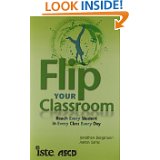
Our journey began by reading Flip Your Classroom: Reach Every Student in Every Class Every Day by Jonathan Bergmann and Aaron Sams, which is a great book for anyone that is a beginner at flipping lessons.

419a5iJwQHL._SL160_PIsitb-sticker-arrow-dp,TopRight,12,-18_SH30_OU01_AA160_

Our principal also had us go to some profession development that was very informative and well worth our time to help us develop what we wanted to accomplish with our students.

So, I decided in my classroom that I wanted to flip grammar.  This is an area kids want to fall asleep and at times can be difficult to engage them.  This year, it has been a success flipping grammar.  My 8th graders have been working a lot with flipped lessons on dialogue and some students created skits with dialogue and performed their skits in front of the class.  It was awesome! I wish I could have taken pics.

By no means am I an expert at flipping lessons yet, it will take me at least through this year to refine my lessons and approach. In addition, I need time to reflect back on what I have done this year too.

Below is a flipped lesson I did with my 7th graders on types of sentences. It is very amateur, but I like it. I used an iPad app called TouchCast, which is free. I hope you enjoy!

http://www.touchcast.com/mr_hyler/The-Latest-on-Sentence-Structure

Cheers!


Ready or Not, Here We Read

WOW! It has been a long time since I wrote a blog post. Now that the book is written and the school year is under way, it is time for me to get back into writing my blog and sharing what is going on in my classroom with my students.

So this past summer I “assigned” reading to my students and I feel that I may have failed my students as their teacher. Yes, I said it, I FAILED my students.  My intent was not turn them off to reading, it was to help with the Summer slump that can occur with our students when they don’t engage their brains at some point. I have a hard enough time motivating my middle school students to read now. Though I see more positive in the last two years, than I ever have.

I asked my students to pick one chapter book to read and to find one non-fiction article to read.  In addition, I gave them a short writing assignment to help me see that they actually did do the reading.

I am really trying hard to become a better reading teacher and I thought this would be something that could help them.  I even celebrated our reading we did over the summer with a treat trying to make it a big deal that we read. In addition, I held drawings for our students to get free books that I bought out of my pocket.

I wasn’t feeling the excitement from my students and there is only so much dancing and singing I can do about books before my middle school students look at me really funny.  Regardless, I still give them that excitement every day! At this point, I want to know where do middle school students lose their interest in reading.  What experiences are they having to turn them off to reading?  I had them take a small survey and here is what I found.

1. Most students couldn’t recall a time where they were “turned off” to reading.

2. My students are more resistant to reading when they are “forced” to read something.

3. Students want choice (I knew this already, but it was still nice to see).

4. Students feel they don’t have time to read when they are in middle school.

So, I am left thinking that I killed my students with “making” them read over the summer.  In addition, how do I get middle school students to realize they do have time to read? I need to do something different, or do more.  Any feedback would be great! Whatever it may be, I am not going to give up on my students.

Cheers!


Digital Literacy Summer Institute Day #1

We were asked on Sunday at the Digital Literacy Summer Institute to watch Matt Harding’s video: Dancing to Connect to a Global Tribe and his This I Believe statement. If you haven’t watched his video, I encourage you to click on the link!

After watching his video we were asked to do the following:

  1. Write…what do you believe about digital literacy? What would your video look like and how would you use words to capture the essence of your images, ideas, and perspectives about digital literacy in a narrative form?
  2. Share your belief statements

Though it is my first draft, below is what I wrote in the short time we had to compose.


I believe digital literacy is a world that is newly discovered and has not revealed itself fully.

In 2010 when I went through the Summer Institute for the NWP, I was brought into a world that completely blew me away. As a visitor I saw a world where students were engaged, teachers were having fun, and creativity seemed to be at the center of it all.

I knew there had to be a different way to reach my students.  How was I going to get them to produce writing that was not only well written in conventional sense, but was thought provoking and brought out their creative freedom? Creative freedom that at one time was helping them bottle up and store away.

The introduction of the digital literacy world exploded in front of my face with students creating artifacts that reflected collaboration, visuals, blogs, wikis, posters, digital stories, reflection, and more. My students were getting sucked into a world that they wanted to be a part of and they were looking at me with compassion in their eyes as if telling me, “Thank-you, thank-you for bringing us home.”

What are your beliefs about digital literacy?

Cheers!