1 on 1 With Young Writers

Today I spent a considerable amount of time meeting with my students individually about their writing.  While I was doing this, the rest of my students were walking through a checklist making sure they had everything they needed before handing in their final draft for grading.  For the last four years I have dedicated a lot of time to making sure I meet with my students one on one about the major writing assignments they have throughout the year.  I firmly believe my students grow as writers with this instructional practice I have put into place.

Depending on the assignment, the students come prepared to talk to me.  The conference should focus around the student talking about their writing.  Now, I want to provide constructive feedback to my students, but the focus is for the student to talk about their writing. Purdue Owl provides a good resource for teachers interested in  starting one on one writing conferences.

Below are the basics for my writing conferences with my students.

  1. Conference shouldn’t last any longer than 3-4 minutes TOPS
  2. Student finds one specific area in their writing that they want to discuss with me (This may vary depending on the assignment)
  3. Student discusses their strengths in the piece of writing.
  4. Student discusses their weakness in the piece and what they are doing to improve their weakness.

I am in a unique situation where I get to teach both 7th an 8th grade English, which means I see the students for two years.  Writing conferences take time for the students to learn.  On most occasions when I begin writing conferences, the students expect me to do all of the talking.  Modeling the procedure is something I would suggest so students start to understand what their expectations will be during the meeting with them.  Unfortunately, it takes time and for my students it takes 3 or 4 times before they completely have a grasp on the procedure.

Taking time to talk one on one with my students about their writing not only helps my students as writers, but it helps me to build a trusting relationship with my students when it comes to their writing.  In addition, my students and I are talking and they are learning conversation skills that are a crucial life skill.

I am looking forward to seeing the amount of growth in this year’s 7th graders like I am seeing in the 8th graders.

Cheers!


Flipping Grammar

Last year, my principal approached our science teacher and myself to think about the idea of flipping some lessons in our classroom.  Since we have the ability to do so we thought it would be a great idea to try.  Here are our goals in doing flipped lessons:

1. Engage our students more.

2. Cut down on missing assignments.

3. Create more time in our classrooms to help remedial students.

4. Give the brighter students a chance to excel at activities presented with each lesson.

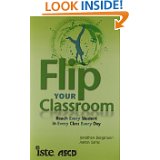
Our journey began by reading Flip Your Classroom: Reach Every Student in Every Class Every Day by Jonathan Bergmann and Aaron Sams, which is a great book for anyone that is a beginner at flipping lessons.

419a5iJwQHL._SL160_PIsitb-sticker-arrow-dp,TopRight,12,-18_SH30_OU01_AA160_

Our principal also had us go to some profession development that was very informative and well worth our time to help us develop what we wanted to accomplish with our students.

So, I decided in my classroom that I wanted to flip grammar.  This is an area kids want to fall asleep and at times can be difficult to engage them.  This year, it has been a success flipping grammar.  My 8th graders have been working a lot with flipped lessons on dialogue and some students created skits with dialogue and performed their skits in front of the class.  It was awesome! I wish I could have taken pics.

By no means am I an expert at flipping lessons yet, it will take me at least through this year to refine my lessons and approach. In addition, I need time to reflect back on what I have done this year too.

Below is a flipped lesson I did with my 7th graders on types of sentences. It is very amateur, but I like it. I used an iPad app called TouchCast, which is free. I hope you enjoy!

http://www.touchcast.com/mr_hyler/The-Latest-on-Sentence-Structure

Cheers!


Ready or Not, Here We Read

WOW! It has been a long time since I wrote a blog post. Now that the book is written and the school year is under way, it is time for me to get back into writing my blog and sharing what is going on in my classroom with my students.

So this past summer I “assigned” reading to my students and I feel that I may have failed my students as their teacher. Yes, I said it, I FAILED my students.  My intent was not turn them off to reading, it was to help with the Summer slump that can occur with our students when they don’t engage their brains at some point. I have a hard enough time motivating my middle school students to read now. Though I see more positive in the last two years, than I ever have.

I asked my students to pick one chapter book to read and to find one non-fiction article to read.  In addition, I gave them a short writing assignment to help me see that they actually did do the reading.

I am really trying hard to become a better reading teacher and I thought this would be something that could help them.  I even celebrated our reading we did over the summer with a treat trying to make it a big deal that we read. In addition, I held drawings for our students to get free books that I bought out of my pocket.

I wasn’t feeling the excitement from my students and there is only so much dancing and singing I can do about books before my middle school students look at me really funny.  Regardless, I still give them that excitement every day! At this point, I want to know where do middle school students lose their interest in reading.  What experiences are they having to turn them off to reading?  I had them take a small survey and here is what I found.

1. Most students couldn’t recall a time where they were “turned off” to reading.

2. My students are more resistant to reading when they are “forced” to read something.

3. Students want choice (I knew this already, but it was still nice to see).

4. Students feel they don’t have time to read when they are in middle school.

So, I am left thinking that I killed my students with “making” them read over the summer.  In addition, how do I get middle school students to realize they do have time to read? I need to do something different, or do more.  Any feedback would be great! Whatever it may be, I am not going to give up on my students.

Cheers!


CCSS Does Not Mean an S.O.S.

It feels good to take on a different format of writing with me writing this blog, I am not going to lie.  It has been over a month since my last post.  I have been extremely busy writing the book and submitting other pieces for publication.  The good news is that I feel as if the home stretch is here or at least near.  Recently, I have been doing more reading on the Common Core State Standards and simply listening to people have discussions on the curriculum as a whole.  After listening to some teachers rant and rave, completing some reading that left me shaking my head, I can’t help but ask anyone who is willing to listen, what is all of the complaining about, really?

I want to begin by mentioning how my state (Michigan) and some other states are trying to now “back out” of implementing the CCSS. Why you may ask?  Quite simply the fear of losing local control or state control of schools or so it appears that way.  This is one place I shake my head from side to side.  Let’s be rational here, the federal government is not trying to take over our schools. Let’s think about what one of the reasons the CCSS was developed.  One of the reasons was to have consistency within schools on what is being taught. Does it have higher demands for students? Yes sir! Is it going to be more work on our part as teachers? Yes ma’am.  Not once have I ever thought the Common Core was designed for a hostile government take over of any school.

Next, I want to address the parent (of a different school from where I teach) who threatened to take their 3 children out of the school their children attend if the teacher or district tried to use the Common Core as the curriculum.  I will be honest with you, I didn’t react to the parent in a hostile manner when I was listening. I just listened.  After their ranting and demoralizing of the CCSS, I asked one question.  What do you not like about the Common Core?  Their answer: It is too hard for my children and too demanding.  On the inside, I was screaming, but on the outside, I politely said thank you for sharing your concern.  To me, their response summed up why I see the work ethic I do today of some students, including the ones that I teach.  Some students (and parents) don’t understand they have to work hard in school!  It isn’t just about socializing or sports.  Furthermore, those students who may struggle a little, are probably going to have to work even harder. Wow and yes that does suck! Should I be teaching work ethic in my class too? Oh wait, I think I do!

Now, I am not saying the CCSS does not have flaws, because it does.  However, I really like what the Common Core is trying to do for our students.  Here are just a few things I notice:

  • Engages our students with more informational text.
  • Causes our students to have higher level thinking skills.
  • Consistency across states with curriculum.
  • The ability for flexibility on how we teach the skills that need to be met.
  • Students get engaged in all 3 genres (narrative, informational, argumentative.

While I notice the positives of the CCSS, the one gripe I will make public here is the little it says about students reflecting on their own work. Reflection is key for student improvement in whatever they do. As a matter of fact, it is a life skill that is essential for growing as an individual. I have to constantly reflect all the time on how to do a better job with my students.

With that being said, I can strongly say the CCSS is not going away anytime soon.  Though we don’t have to embrace it like a big fluffy teddy bear, it is no reason to toss out the emergency S.O.S. life belt.

Cheers!


Just Hanging Out…and Learning

This week has been crazy to say the least.  On the other hand, it has been phenomenal!

Tuesday, my 2nd hour seventh grade class began an adventure I felt was worth taking.  For quite some time a writing project colleague and myself had discussed having our classes collaborate with each other using Google Hangout.  If you do not have prior knowledge of Google Hangout, it is just that, an online space for people to collaborate via web cams and voice chat, or…hangout!  I believe up to 10 people can chat at the same time. The idea was brought on by our discussions we have had previously about using digital portfolios.  Eventually we decided we wanted our students to collaborate and discuss the myths that each our classrooms were reading and writing along with have the students publish their writing to a broader audience.

As we searched for a common time for our students to meet online, it occurred to us that we needed to introduce our students to each other before we did any real collaboration about the myths.  Each of our classes had written “This I Believe” essays, and we decided we would use these essays as a mean for our students to get to know one another. Because my own students had already written their essays at the beginning of the year, it was a great time for my students to reflect back on their writing to polish it and decide if their beliefs had changed at all.  Furthermore, they needed to understand their writing was going out into the bigger world for people to see and they needed to clean it up before publishing.

Prior to work with the essays, we showed our classes our school websites, discussing  with students what they noticed.  In addition, any questions they might have.  Before our meeting on Tuesday each of our classes composed questions to ask one another.  As we were hanging out, the students went in front of the camera  and asked questions about each other’s school.  For example:

  1. What types of writing have you done this year?
  2. How many students do you have in your middle school?
  3. What sports can you play at your school
  4. What do you do for fun?
  5. Can you choose your own electives in middle school?

After the students took turns asking questions and answering them, we talked with the students about what we were going to do next with them.

As I mentioned earlier, the students are using their “This I Believe Essay”  to get to know each other more. My colleague and I decided we would have the students post their essays on Youth Voices. Youth Voices is an online platform where students can publish their writing where other students can discuss the same topics or issues.  By having the students post here, they could read each other’s essays and respond appropriately.

Youth Voices (youthvoices.net)

Youth Voices (youthvoices.net)

This allows the students to see what beliefs they may have in common or what they may not have in common as well.  Regardless, we feel that our students are now publishing their writing for a broader audience besides their teacher or classmates. Furthermore, they will get feedback that can have the potential to make them better writers in the future.  After our students have posted to Youth Voices and everyone has had a chance to be paired up to respond to at least one other student, we will move forward and participate in doing more live hangouts where our students can discuss myths.

Reflection

Doing something this simple with technology has long lasting impacts on the students from each class.  First, I would like to say our schools are very different when it comes to the dynamics of the number of students and the cultural diversity.  My middle school consists of 120 seventh and eighth graders.  My colleague has just over 500 in the same two grades.  My school consists of about 98% whites where his school has Latinos, Hispanics, Arab, African American, and whites.  With this being said, I felt it was wonderful for my students to be emerged into this type of cultural diversity.  Our students need to learn they will be working with a very diverse culture when they enter the work force.

I was also surprised at how my students “locked up” when it came time to talk on camera.  They were dead silent and if it wasn’t for the fact I had students assigned for each question being asked, I would not have had volunteers.  My students were very shy and I was shocked at this.  In the end, when it came to them talking on camera, they needed to speak up too.  My colleague actually felt his students were rude and too loud.  A concern, I actually thought was going to arise.

Overall, Google Hangout and Youth Voices are great tools, especially ones that can help meet the demands of the Common Core Standards. The ideas behind using the online tools were to:

  • Collaborate
  • Practice communication skills
  • Publish student writing to a broader audience
  • Receive feedback on student writing
  • Become connected with other learners
  • Be exposed to more diversity as is such in the real world

Cheers!

Teaching Students to Reflect on Their Writing

Recently I came to the conclusion middle school students need instruction on how to effectively reflect on their writing. I just got done handing back my 7th graders book reviews. My classroom is essentially paperless and they had to complete the assignment using Google Docs. As I grade papers, whether it is 7th or 8th grade, I make notes on the areas my students struggle with throughout the particular writing assignment. Throughout this assignment, students struggled with basic spelling, sentence structure, and capitalization. In addition, students struggled with one major concept with the review, which was the compare/contrast section of the review.

Upon returning the student’s papers I asked the students to have me help them. I was frustrated with them not following directions. After all, I am well into the second semester and I needed them to realize their mistakes were nothing more then following simple directions. When I asked them what I can do to make them more successful…silence. Why couldn’t my students reflect on their own writing, or even their own work so I could help them grow?

After discussing with a colleague who had taught English before, we both came to the conclusion middle school students don’t know how to reflect on their work. My students have writing portfolios, both physical and digital. in addition, I have given them reflection prompts for their past assignments, but in all honesty I feel confident my students are more or less going through the motions rather then thinking critically about their own writing and how they can make it better. The Common Core State Standards say very little about reflection, but it is essential for creating a more rigorous classroom and for students to evaluate their own learning.

So, what can we do as middle school English teachers to help students reflect on their writing? To be honest, I don’t have any solid answers. One strategy I have adopted for my students is for them to look at a specific comment I have placed on their document. Then, they need to rewrite the comment and complete some tasks on a pre-made template I hand out to students. Below are the tasks.

1. What was your initial response to the comment by Mr. Hyler?

2. In your own words rewrite what it is that Mr.Hyler commented on.

3. Give an example of how you are going to make your writing better based on the comment by Mr. Hyler.

4. How are you going to apply what you learned from reflecting on your writing to future assignments? Be specific.

I am sure there are other ways for students to reflect on their writing. I am going to continue to research this important task that is vital for developing strong writers and strong students in general.

Cheers!


Will the Common Core Burn Out Teachers?

I am almost 1/2 way through the 3rd marking period and I am not going to lie, I am exhausted. Now, I do have a full plate when it comes to everything else going on in my life, but I want to talk about just teaching for a moment. Despite the fact I just turned 35, I have no plans of slowing down anywhere.

Anyone who knows me, realizes I do not settle for average. It is one of the main reasons my principal and I get along so well. I work hard for my students and am trying to set an example for them all. In addition, I am a supporter of the Common Core State Standards (CCSS) and see endless Possibilities. Freedom to be creative with assessments, integration of technology, collaborative learning, more vigorous learning (Yes, I said vigorous, not rigorous!), and the idea students can do research projects are just a few reasons why I see the upside to the CCSS.

On the other hand, I hear and read the negativity about the Common Core weekly. Teachers don’t think it is clear enough, they feel the need to start over with lesson and unit plans, others feel the Core has unrealistic expectations for students from kindergarten to twelfth grade.

I hear everyone loud and clear and I am not trying to add to the complaining, but I am wondering if the Common Core is going to push some teachers over the edge. Currently I teach both 7th and 8th grade English and the CCSS is fully implemented. My lessons are not only driven by the Common Core, but I also do sample Smarter Balanced Assessment questions with each of my classes. I have very little time to do anything else. I am sure other teachers feel the same way.

With little time to breathe, I worry about a few things. First, I worry about the potential for quicker burn out amongst younger teachers who are entering the profession. Are the younger teachers going to feel the task of implementing a challenging curriculum too demanding? Will the CCSS overwhelm them to the point they seek other job opportunities? I guess time will tell.

In addition to new teacher burnout, I worry about teachers being too accepting of a canned curriculum program that teachers will purchase so they don’t have to do any work as far as creating thoughtful and inspiring lessons. It is a concern that is a reality, trust me. There are many textbook companies and publishing companies that are going to produce Common Core guides, lesson plans, how-to’s, and many other resources. Eventually, the market will be flooded with a plethora of information on how to reach our students through the CCSS.

In all honesty, it is going to take hard work and determination to elevate our students to the level they need to be. It is going to take collaborative meetings between elementary, middle and high school teachers to sort out the finer detail. We will be forced to rethink what we are doing in our own classrooms and reevaluate what can stay and what has to go. It is not going to be easy and thus far, for me, it hasn’t. However, I will continue to push forward and do what it takes to be successful with my students. Even if it means I take a thermos of coffee into work everyday to stay awake.

Cheers!


Why Twitter is Valuable in the Classroom

Have you ever looked at the idea of teaching informational writing and thought to yourself it was going to be a struggle to motivate your students?  I honestly used to dread teaching any type of informational writing to my students.  I always felt my students were very disconnected in the informational world of writing.  I have taught compare/contrast, and a straight up expository writing where students had to pick a topic and “explain” it or give information on the topic they chose.

Well, without a doubt it is safe to say I was being a lousy teacher in the past.  Sometimes I wish I could have those days back when I could have done so much more for my students. 

Now, because I can’t change the past,  I won’t dwell on it. Today, my students are exploring several different pieces of informational text.  As mentioned in my last post, my students know informational writing already. I have to give them a lot of credit.  On the other hand, when it came to introducing them to Twitter, they were not so well versed.  Out of the three 7th grade classes I teach I had a total of eight students raise their hand when I asked who had a Twitter account.  This led me to ask them about their use of Twitter and only two of the eight students actually use Twitter at least once a week.  This has led me to do some thinking about social media.  Is the hype over using social media winding down? I believe I even mentioned this in my last post about Facebook.  Students, or at least my students, don’t seem to be connected as much to the social media sites.

Now, my students are well aware of what Twitter is and they know about people following you and you following others. As our discussion progressed we discussed professional uses and business uses of Twitter.  Students came to the understanding that businesses use it because it is free advertising for companies that would otherwise have to pay for commercials, billboards, or magazine ads. They were spot on when we talked about reaching audiences who were technology savy and may do their shopping online.  We even talked about free giveaways (like the one I am having now). 

When it came to the professional use of Twitter, it was a tougher conversation.  Students needed to understand how Twitter can be rich with information that can be valuable to them and adults such as myself.  It is much more than following what Justin Beiber is doing. I shared with my classes who I follow and what I am trying to get out of Twitter. I talked about how it is my professional community where I can obtain resources and information about teaching, education, reading, and writing.

At this point, this is where we discuss the idea of hash-tags and what they are used for on Twitter. For my class, we will be using hash-tags to display items like examples of complex sentences, compound sentences, subordinate clauses, etc.  This will build mentor texts for my students to refer to when they are reading or writing.  In essence I am helping them build their own professional community.  Twitter will also help them build more understanding about being a digital citizen as they follow other classmates and use the community we will build using hash-tags.

Our lessons on Twitter runs about two days.  By the end of the second day I have the students do a paper tweet in their journal practicing the 140 character rule that Twitter has for tweets. Students write about anything from what they did the night before to what they might be doing after school.  Next week, we will start effectively using our hash-tags in class.

Cheers!


As the Common Core Band Wagon Rolls By, I Stand and Wave

I wasn’t sure how to title today’s post.  I hope by the time anyone reads this, my post is well understand.

Recently we had another department meeting and I must say I enjoy our department meetings because we are always busy and engaged and trying to do what is best for the students that face us every day! One of the high school teachers was feeling the pressure of potentially not doing enough to meet the demands of the Common Core State Standards. The word rigor came into focus (See my previous post on rigor -vs – vigor). As the conversation progressed,  I couldn’t help but wonder how many other teachers are feeling the way my colleague has been. Their thinking was perhaps if  they used another Shakespeare unit in addition to what they were already doing might make their class more demanding and students would be required to do more deeper thinking.  Note to anyone: Adding more, does not mean a class is more rigorous (My colleague wasn’t thinking this, I just wanted to throw that out there).

This also spurred the conversation about looking at different curriculum in general to use in the classroom.  Though we weren’t considering replacing what we are currently doing, we were discussing what other possibilities could be included to extend our current practices or what were valuable resources to aid us in our teaching.

I have done a lot more thinking since that meeting and my colleague had a great point about what they have observed.  The sad thing is, I have observed it too. We have both noticed this mad frantic race to implement Common Core and have heard teachers discussing how their schools have these curriculum teams to rewrite their entire curriculum and these huge meetings are taking place to change to the CCSS.   In addition, everyone is making this mad dash to find the best books that are available to help them implement the CCSS.

Well, as I stand here and wave at the bandwagon rolling past me with others on it, I will tell you I haven’t completely changed my curriculum or gone to some canned program that companies might be trying to sell to schools and teachers. When my school did switch to the Common Core, I got out my curriculum and went through it with the Common Core Standards right next to it.  I went through and looked at what standards I was already meeting with the existing units and lessons I was teaching. Now, was I missing some things?  Absolutely! I will admit, I had to do some overhauling in some areas and not so much in others.

What I didn’t do was scrap everything I was doing in my classroom and look for the easy way out by trying to find existing CCSS units.  The Common Core allows us to use what we already know and it also challenges to implement new ideas and technologies.  I strongly believe if teachers are trying to find the magic button for teaching the Common Core in their classroom, they are going to be really disappointed, because there isn’t a magic button to push.

So, if you feel you are one of those people who are completely lost and you hope there is going to be this miracle curriculum program that is going to come out for you to use in your classroom, I invite you to examine what you are currently doing in your classroom first before jumping on the band wagon.  If you do jump on, I will be waving to you as you roll past!

Cheers!


Rigor -vs- Vigor

I have officially arrived at NCTE. As a first time Vegas guest, I must say it is crazy. My body has not transitioned to the time change and I am up at 5:00 a.m. working on my blog. A nap may be order later, but who knows with so many great sessions.

Speaking of great sessions, yesterday evening Barry Lane gave another one of his spectacular performances for NWP teachers. Though I didn’t attend earlier annual meeting sessions, my NWP peeps convinced me to peek in on what Mr. Lane was doing. If you have ever been to one of Barry Lane’s presentations, you know it is very entertaining and informative.

After laughing continuously and feeling energized as ever, he brought up the term “rigor”, which has been associated with the Common Core Standards since they have been released. Teachers are supposed to have more “rigor” in the classroom with the CCSS. When he asked a woman in a video what her definition of rigor was she stumbled and passed the buck on to her friends that she was standing with. Needless to say, their definition was less than perfect. So Mr. Lane put up the first six definitions of rigor from the dictionary. Here are a few of them!

1. Strictness, severity, or harshness, as in dealing with people.

2. A sever or harsh act, circumstance, etc.

Does this sound like something we should be infusing into our classrooms? Barry Lane had a few other definitions from the medical dictionary too. One medical definition is, shivering or trembling, as caused by a chill. Again, do we really want to be teaching something like this in our classroom? Tom Romano was even in a video where he said rigor is the sister of mortis. I cracked up on that one.

Instead of “rigor”, Mr. Lane said we should be teaching “vigor” instead. I couldn’t agree more, especially after seeing that definition

Vigor

1. Healthy physical or mental energy or power; vitality.

2. Force of healthy growth in any living matter or living organism.

Perhaps the two are easy to confuse. I know that vigor sounds much more appealing and attainable in my classroom. I also know “rigor” can occur in my classroom too and if I adhere to the definition, my students are going to get turned off as learners. Can there be a balance of both? What are your thoughts?

Cheers!